BUILD SHIPS FASTER.
CHOOSE ERIE, PA

WHY ERIE
Erie, Pennsylvania offers a unique opportunity for shipbuilders to expand capacity, reduce costs, and increase throughput within the U.S. maritime industrial base.
As the Navy, MARAD, and industry partners seek to increase production capacity for submarines, surface vessels, maritime systems, and associated components, Erie offers an immediately deployable inland manufacturing platform capable of positioning the region as a Great Lakes maritime manufacturing and shipbuilding expansion node supporting existing shipbuilders with workforce, fabrication capacity, and scalable waterfront infrastructure.
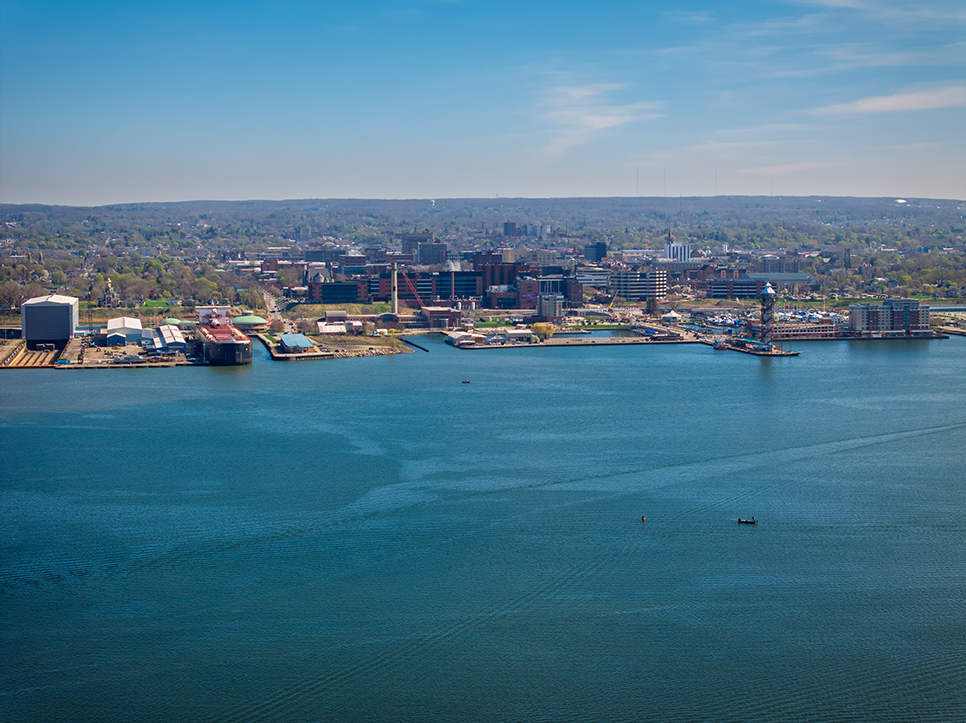
With a natural harbor, active port facilities, available industrial land, and a deep manufacturing base, Erie provides a lower-cost, inland complement to existing shipyard operations.
Erie is not starting from scratch—we are building upon an existing industrial base to help shipbuilders scale and BUILD SHIPS FASTER.
STRATEGIC
LOCATION
Erie sits at the center of the Great Lakes industrial corridor, offering direct access to:
- Domestic steel and raw materials
- Established manufacturing supply chains
- Great Lakes shipping routes
- National rail and highway networks
- A captive inland vessel market that coastal shipyards cannot efficiently serve due to Seaway constraints.
- A region deeply engaged in the defense industrial base, with $791 million in Department of Defense obligations.
- A portfolio of waterfront industrial properties and redevelopment opportunities ranging from approximately 1 acre to more than 186 acres, including waterfront parcels, water lots, rail-served industrial properties, and expansion sites.
- Hundreds of additional acres of available inland industrial sites positioned along major transportation corridors, providing scalable opportunities for supplier expansion, advanced manufacturing, warehousing, and future maritime-related production activities.
For all available sites, contact info@infiniteerie.com
Erie enables shipbuilders to expand into the Great Lakes market while strengthening national production capacity.
WORKFORCE:
BUILT FOR SHIPBUILDING
Erie offers a skilled, industrial workforce aligned with shipbuilding needs, including:
- MIL-STD Welders
- Fabricators and machinists
- Electrical and mechanical technicians
- Engineers and production specialists
Erie’s regional integrated education and workforce system produces approximately 750 technically trained workers annually, spanning engineering and cybersecurity. There are skilled trades providing a deep and scalable talent pipeline aligned with shipbuilding and defense manufacturing.
Erie is building a workforce pipeline specifically aligned with shipbuilding growth—not generic training.
IN WAGES
JOBS SUPPORTED
Manufacturing
jobs in five-county corridor
Manufacturing
establishments in five-county corridor
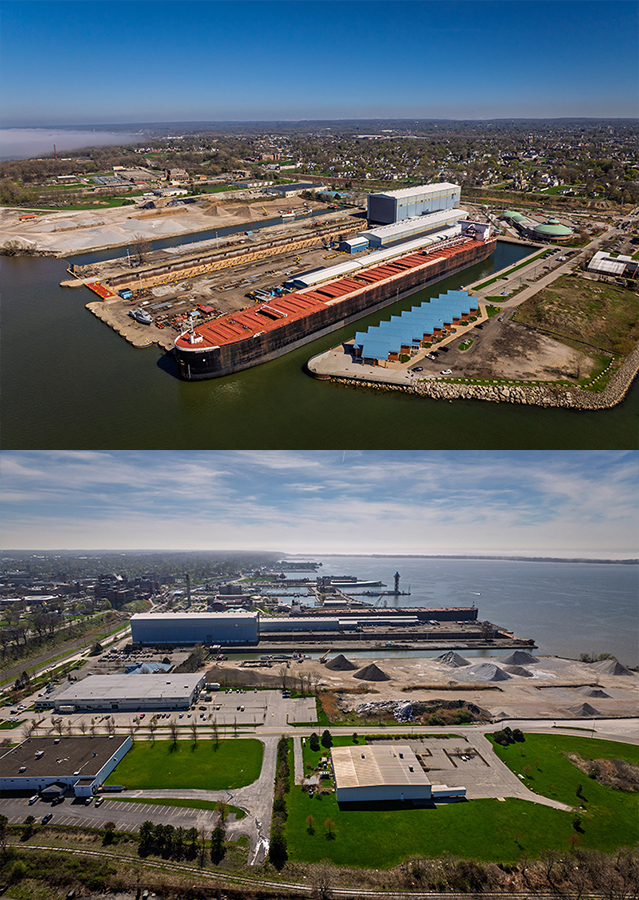
LARGEST DRYDOCK ON THE GREAT LAKES
DONJON SHIPBUILDING & REPAIR
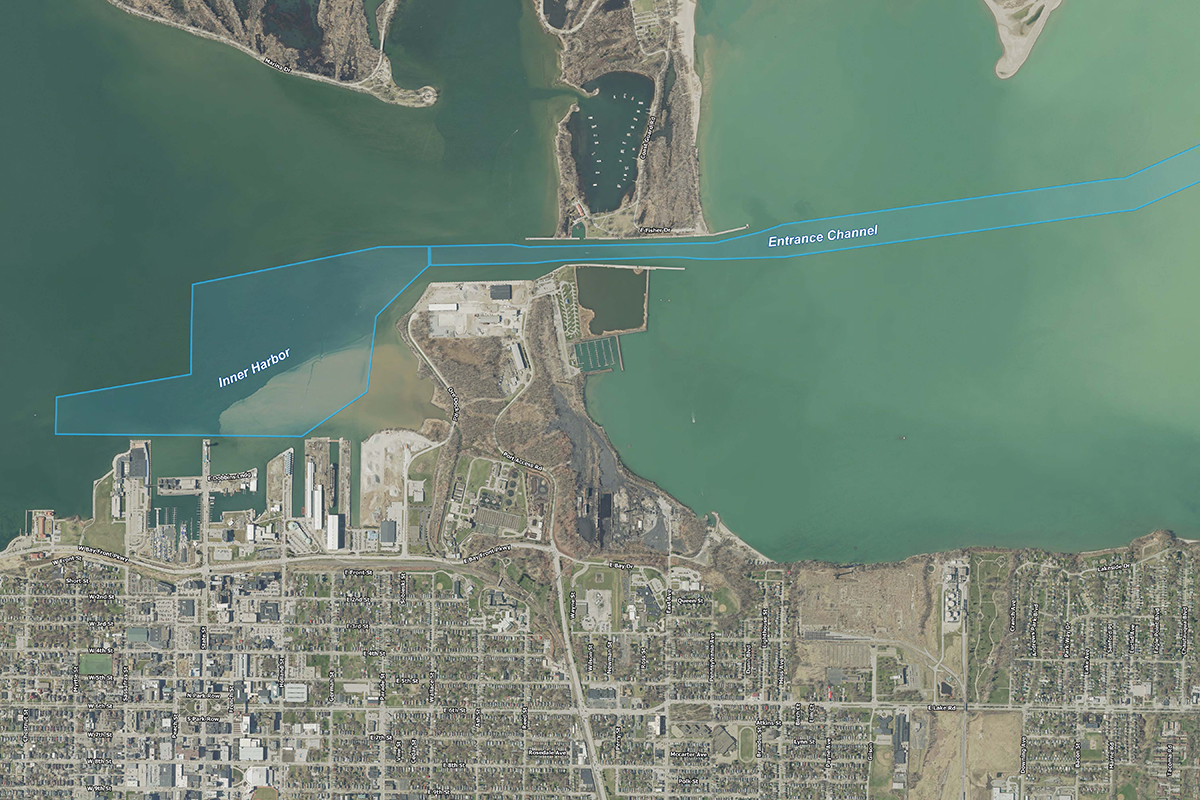
Erie’s port and waterfront assets provide a ready platform for maritime operations and expansion.
The Erie-Western Pennsylvania Port Authority offers direct access to the St. Lawrence Seaway and global markets, while rail and highway connectivity ensure efficient movement of materials and components.
Erie’s inland location provides:
- Operational flexibility
- Lower congestion
- National security resilience
1,250’ x 120’ x 22’
DRY
DOCK
1,000 ft
DRY DOCK
CAPACITY
200,000+ sq ft
PRODUCTION
AREA
Complementing Donjon’s shipyard capability, the broader Port of Erie functions as an active, full-service maritime and industrial terminal. Erie’s port terminal, operated by Carmeuse, handles a wide range of cargo, including Lake Erie sand, stone, salt, and project cargo, with more than 1.2 million tons of goods handled by vessels in 2025.
1.2M tons of goods
HANDLED BY VESSELS IN 2025
Collectively, these port assets position Erie to support fabrication, module construction, and future shipyard development.
WHY INVEST
IN ERIE?
- Lower-cost expansion platform
- Skilled and scalable workforce
- Available waterfront industrial sites
- Access to Great Lakes and inland markets
- Alignment with national shipbuilding priorities
Erie helps shipbuilders build more ships—faster and at lower cost.
OUR
HISTORY
Erie, Pennsylvania has been a center of maritime and industrial innovation for more than 200 years. Home to Pennsylvania’s only Great Lakes port, Erie has long leveraged its naturally protected harbor and strategic location to support commerce, manufacturing, and national defense.
Erie’s maritime legacy began during the War of 1812, when Commodore Oliver Hazard Perry’s fleet was built here, securing the pivotal American victory at the Battle of Lake Erie. Throughout the 20th century, the region continued to strengthen the nation’s industrial base, with local manufacturers supporting the World War II effort and companies such as General Electric Transportation producing locomotives that powered America’s freight network.
Today, Erie builds on that heritage with a highly skilled manufacturing workforce, deep expertise in machining, fabrication, and advanced production, and a robust network of industrial suppliers. Combined with multimodal transportation assets and direct access to the Great Lakes and St. Lawrence Seaway, Erie offers a strong foundation for maritime manufacturing, shipbuilding, and defense supply chain growth.
photo by Naval Historical Association
ERIE MARITIME INITIATIVE:
A STATEMENT OF SHARED SUPPORT
A collaborative regional effort to strengthen awareness, alignment, and support around Erie’s maritime and industrial opportunities.
Built around Erie’s waterfront, industrial, workforce, infrastructure, logistics, and educational assets, the initiative seeks to advance regional collaboration and shared support.
Maritime & Industrial Assets
Recognizes Erie’s existing shipbuilding, logistics, infrastructure, and manufacturing strengths.
Regional Collaboration
Brings together governmental, business, nonprofit, education, and workforce partners.
Shared Support
Creates a common platform for advocacy, alignment, and long-term regional opportunity.
“We, the undersigned, commit to support the continued development of the Erie Maritime Initiative as a collaborative, regional framework to strengthen Erie County’s maritime, industrial, workforce, infrastructure, logistics, and economic development assets; support existing employers and industries; attract future investment; expand opportunity for residents and businesses; and position Erie as Pennsylvania’s Great Lakes maritime hub and a strategic inland partner within the evolving U.S. maritime industrial base.”
Governmental Partners
- U.S. Senator John Fetterman (PA)
- U.S. Senator Dave McCormick (PA)
- U.S. Representative Mike Kelly (PA-16)
- Governor Josh Shapiro, Commonwealth of Pennsylvania
- Pennsylvania Senator Dan Laughlin (49th)
- Pennsylvania Representative Patrick J. Harkins (1st)
- Pennsylvania Representative Robert Merski (2nd)
- Pennsylvania Representative Ryan Bizzarro (3rd)
- Pennsylvania Representative Jake Banta (4th)
- County Executive Christina Vogel, Erie County
- Mayor Daria S. Devlin, City of Erie
- Harborcreek Township Supervisors
- Millcreek Township Supervisors
Industry & Business Partners
- Carmeuse
- Dilworth Paxson – Roger Richards
- Donjon Shipbuilding & Repair
- Erie Insurance
- Gem City Shipbuilding
- Hardinger Integrated Logistics
- Knox Law
- Logistics Plus
- MacDonald, Illig, Jones, & Britton LLP
Economic Development, Education, and Community Partners
- Corry Higher Education Council
- Erie County Community College
- Erie County Redevelopment Authority
- Erie Regional Chamber
- Erie Together
- Erie-Western Pennsylvania Port Authority
- Gannon University
- Great Lakes Building and Construction Trades Council
- Infinite Erie
- Manufacturer and Business Association
- Northwest Industrial Resource Center
- Penn State Behrend
- Power Northwest
- The Erie Community Foundation